
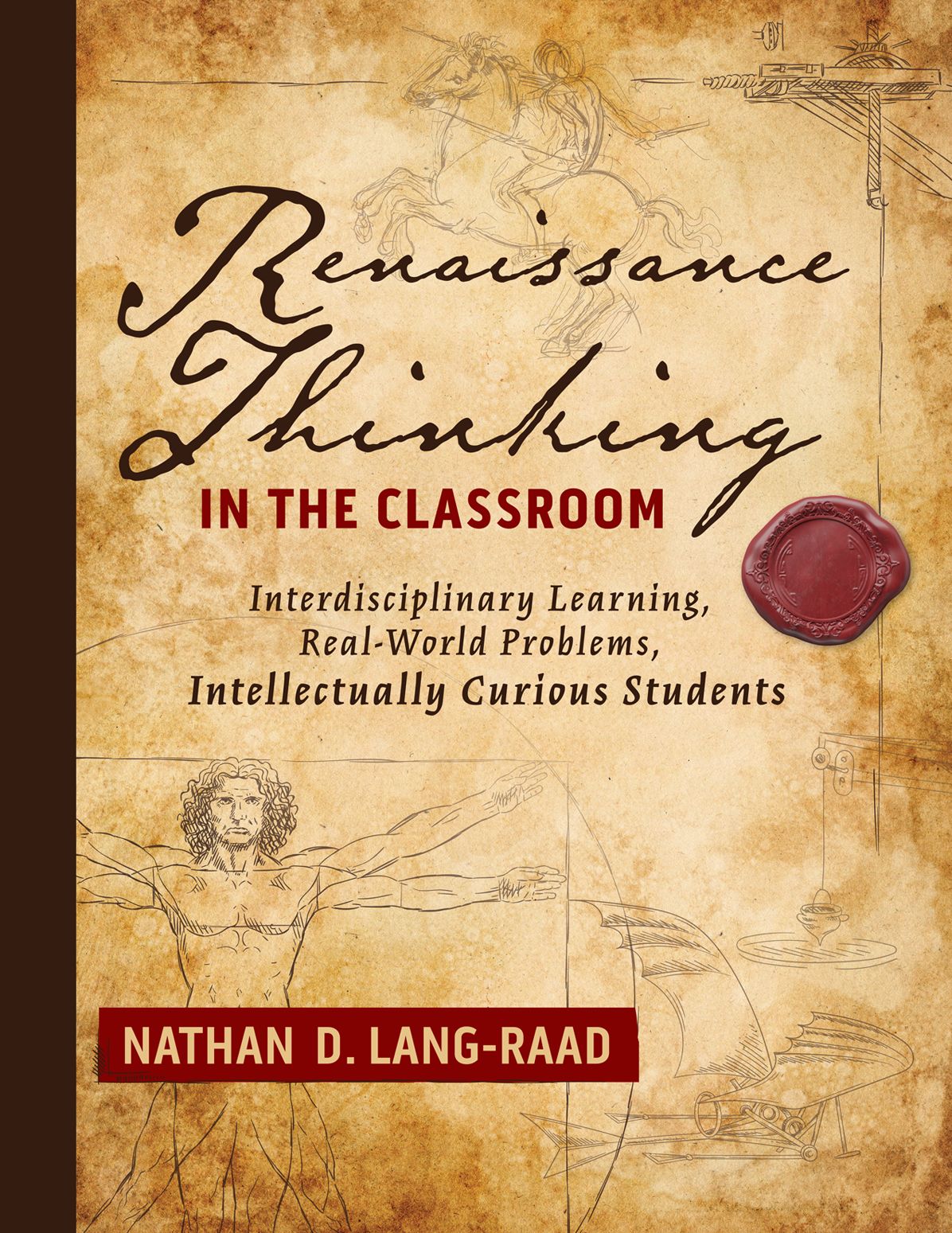
Renaissance Thinking in the Classroom: Interdisciplinary Learning, Real-World Problems, Intellectually Curious Students
Thank You For Your Reservation
You will receive an email once your order is confirmed. Items will be held for 7 days before being returned to inventory.
Renaissance Thinking in the Classroom: Interdisciplinary Learning, Real-World Problems, Intellectually Curious Students
Paperback
Prices may vary by store.
Select Store
Picking Up At:
Colfax Ave.
2526 E Colfax Avenue
303-322-7727
Store Hours:
Mon-Sat: 10-8
Colfax Ave.
2526 E Colfax Avenue,
Denver, CO 80206
303-322-7727
Store Hours:
- Mon-Sat: 10-8
- Sunday: 10-6
Aspen Grove
7301 South Santa Fe Drive,
Littleton, CO 80120
303-470-7050
Store Hours:
- Mon-Thu: 10-7
- Fri-Sat: 10-8
- Sunday: 11-6
Union Station
1701 Wynkoop Street in
Historic Lower Downtown Denver
303-535-9980
Store Hours:
- Every Day 8-8
Stanley Marketplace
2501 Dallas Street, Suite 144,
Aurora, CO 80010
212-697-3048
Store Hours:
- Every Day 10-7
After completing your reservation, you'll receive an email when your order is ready. Items will be held for 7 days before being returned to inventory. Payment will be due at pickup. By providing the information below you agree to Barnes & Noble's Privacy Policy which can be viewed here.
An error occurred while reserving your item. Please try again later.
Format: Paperback
This book will help K–12 teachers, instructional coaches, and curriculum designers:
- Understand why the nine habits of thinking must be embedded and applied across all grade levels
- Use a detailed challenge-based framework template to design and perform interdisciplinary lessons
- See how historical polymaths’ practices can apply to and enhance 21st century learning
- Complete chapter activities to ensure the habits are appropriately incorporated for all developmental stages and grade bands
- Study research-supported examples of the habits’ and the framework’s successful application
Contents:
Introduction
Part I
Chapter 1: Foster the Nine Habits of Thinking in K–12 Learning
Chapter 2: Habit 1—Cultivate Diverse Curiosity
Chapter 3: Habit 2—Take Risks
Chapter 4: Habit 3—Use Humor
Chapter 5: Habit 4—Develop Creativity and an Innovative Outlook
Chapter 6: Habit 5—Build Self-Regulation
Chapter 7: Habit 6—Transfer Learning
Chapter 8: Habit 7—Ask Questions to Engage in Genuine Inquiry
Chapter 9: Habit 8—Evaluate Evidence
Chapter 10: Habit 9—Embrace Lifelong Learning and Perseverance
Part II
Chapter 11: Integrate the Challenge-Based Framework and the Habits of Thinking
Chapter 12: Integrate Academic Standards
Chapter 13: Integrate 21st Century Skills
Chapter 14: Engage Teacher Collaboration
Chapter 15: Engage Student Collaboration
Epilogue: Renaissance Reimagined
References and Resources
Index
Choose options
New Releases











2526 E Colfax Avenue Denver, CO

7301 S Santa Fe Drive Littleton, CO

2501 Dallas St. Suite 144 Aurora, CO

1701 Wynkoop Street Denver, CO