
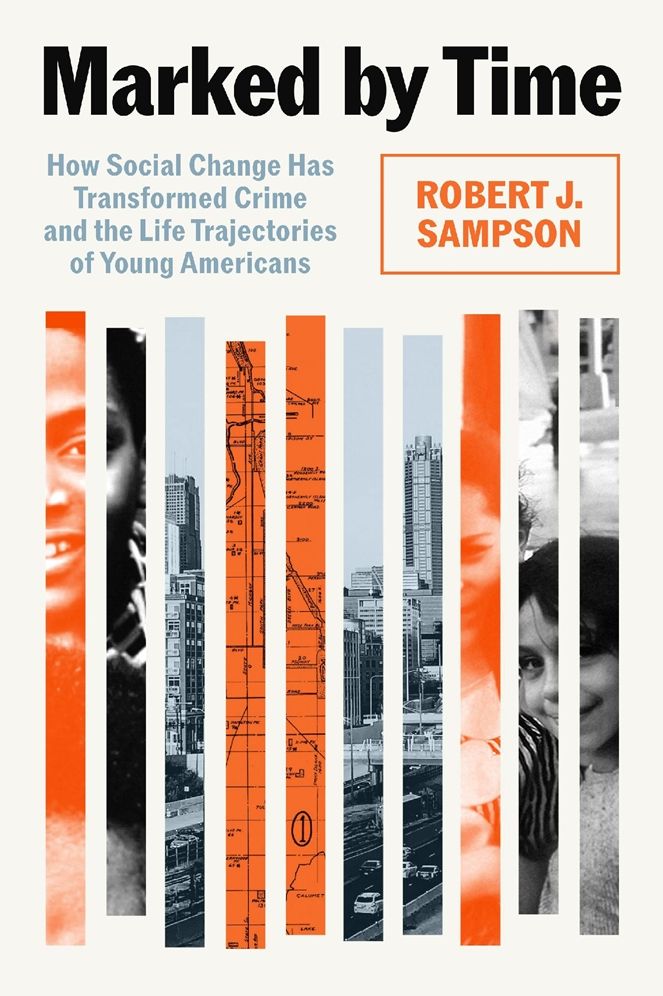
Marked by Time: How Social Change Has Transformed Crime and the Life Trajectories of Young Americans
Thank You For Your Reservation
You will receive an email once your order is confirmed. Items will be held for 7 days before being returned to inventory.
Marked by Time: How Social Change Has Transformed Crime and the Life Trajectories of Young Americans
Hardcover
Prices may vary by store.
Select Store
Picking Up At:
Colfax Ave.
2526 E Colfax Avenue
303-322-7727
Store Hours:
Mon-Sat: 10-8
Colfax Ave.
2526 E Colfax Avenue,
Denver, CO 80206
303-322-7727
Store Hours:
- Mon-Sat: 10-8
- Sunday: 10-6
Aspen Grove
7301 South Santa Fe Drive,
Littleton, CO 80120
303-470-7050
Store Hours:
- Mon-Thu: 10-7
- Fri-Sat: 10-8
- Sunday: 11-6
Union Station
1701 Wynkoop Street in
Historic Lower Downtown Denver
303-535-9980
Store Hours:
- Every Day 8-8
Stanley Marketplace
2501 Dallas Street, Suite 144,
Aurora, CO 80010
212-697-3048
Store Hours:
- Every Day 10-7
After completing your reservation, you'll receive an email when your order is ready. Items will be held for 7 days before being returned to inventory. Payment will be due at pickup. By providing the information below you agree to Barnes & Noble's Privacy Policy which can be viewed here.
An error occurred while reserving your item. Please try again later.
Format: Hardcover
A leading sociologist’s groundbreaking three-decade study challenges outdated views of crime and character, revealing that traditional risk factors alone poorly predict children’s futures.
Between 1970 and 2020, the United States experienced a dramatic rise in crime and incarceration, followed by an unexpected decline. Along with plummeting violence came reductions in substance use, car accidents, child poverty, and lead exposure. By 2020, incarceration rates hit a twenty-five-year low, with African Americans benefiting the most. Yet these positive shifts have not registered in public discourse or policies, which continue to rely on outdated studies and reductive narratives of moral character and personal responsibility.
A major reason for this oversight is how social scientists study youth development—typically through single-birth-cohort approaches that fail to capture generational change. In a pioneering three-decade study of over one thousand Chicago children across multiple cohorts, Robert J. Sampson challenges this convention. He finds that children with similar self-control and family backgrounds, born just a decade apart, experienced dramatically different life paths. Strikingly, children born in the mid-1980s faced twice the likelihood of arrest by their mid-twenties than those born ten years later.
This research reframes deeply ingrained assumptions about ongoing social decline and the importance of individual fortitude. Sampson spotlights the role of shifting social conditions and structural change in driving measurable improvements in youth trajectories, along with new risks that threaten these gains.
The era into which a child is born shapes their future as profoundly as race, upbringing, or neighborhood. To rethink progress, inequality, and policy, we must first acknowledge how time itself leaves a transformative mark on individual lives.
Choose options
New Releases













2526 E Colfax Avenue Denver, CO

7301 S Santa Fe Drive Littleton, CO

2501 Dallas St. Suite 144 Aurora, CO

1701 Wynkoop Street Denver, CO